Our strategy identifies maker income, continuity of skills and capacity for new designs as pressures on Channapatna. Design can help by creating relevant objects that suit the making process, but it cannot replace fair working terms or establish impact by itself.
That is a narrower answer than “saving a dying craft”. It is also more useful. A dramatic headline makes the buyer feel important. A workable design, clear agreement and repeat work give everyone something concrete to discuss.
The Gubbi is starting with a collection, not announcing that those wider problems are solved. We want to keep the difference visible. Before telling a story about a maker’s livelihood, we need their account, their permission and facts that are current enough to publish.
What the strategy says, and what needs checking
The strategy reports low pay in some local-market work and younger people leaving the craft. It also identifies pressure from lookalikes and reduced roadside sales after the expressway opened. These are working-document observations, not findings from interviews we have already conducted.
The same document treats labour and the ability to meet demand for new designs as constraints. That challenges an easy assumption: a brand cannot sketch something complex, call it an opportunity and expect the making capacity to appear.
We are leaving out the document’s artisan counts, income figures and percentages until their original sources and present relevance are checked. A number repeated from a strategy note does not become a verified fact because it sits in a nicely designed article.
This is also why the visit matters. Makers may describe different pressures, or put them in a different order. Their answers should change the article. An interview is not a way to collect a quote that agrees with a headline written beforehand.
Make the design fit the work
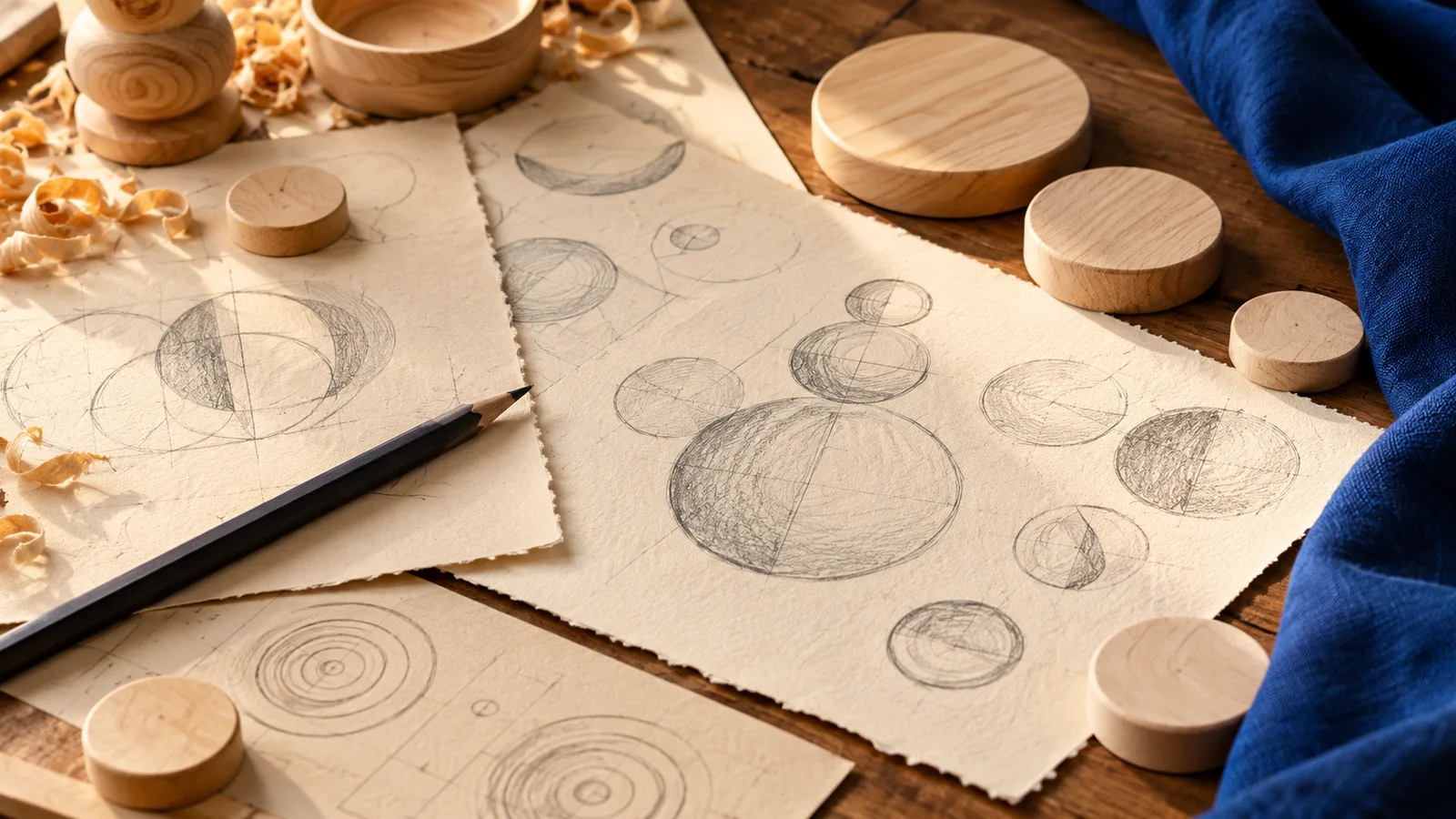
The strategy’s practical design advice is clear: Channapatna is lathe turnery, and round forms belong to that process. Boxy forms require other making decisions. Respecting that distinction is a useful starting point for a designer.
A complicated sketch can hide a lot of labour. A base, a wheel, a sign and several decorative parts might look like one small object to a buyer. To the maker, they are separate operations, alignments and opportunities for something to go wrong.
The question is not whether a skilled person can make one beautiful sample. The question is what a design asks them to repeat. If a simpler form keeps the recognisable idea, the design has improved rather than lost ambition.
Our process explanation and craft page give that discussion a material starting point. They explain turning and lac colour without pretending to document a completed partnership.
Give the object a subject people recognise
The strategy argues for specificity. The object should have a reason to exist beyond being a generic souvenir. For Collection 01, Peak Bengaluru, the subjects are AI habits, office life and the city: the commute, the rent deposit, the notice period.
Delegation is a good example of the design intention. Nesting dolls are an old form; here the CEO opens to the Manager, the Engineer and the Intern, and inside sits the bead that did the work. You are meant to think of an org chart you have lived in, rather than a vague idea of traditional decor.
That does not make the craft merely a background for a joke. The joke must work with the object. The form, colour and lettering should belong together. Otherwise the story becomes packaging for a design the material never agreed to.
Keep business promises separate from evidence
Fair terms matter, but a statement of intent is not a wage study. We should not claim that a purchase doubles anyone’s income, funds a family or preserves a specific number of jobs without records supporting that claim.
The same applies to production volume. A free reservation tells us someone is interested. It is not a completed purchase, and it is not already income received by a maker. Our pre-order policy says a reservation carries no obligation to buy.
The distinction makes the story less convenient. Good. Convenience is not the standard for describing someone else’s work. We would rather publish a small, supported account than a large claim with no way to check it.
Questions better than a rescue slogan
Ask which parts a maker wants to produce. Ask what a new sample costs, what work it requires and what can be repeated. Ask how the maker wants to be credited. Ask what they would change in the design before discussing the headline.
For readers, ask what you want to keep. A specific object can stay relevant after its first laugh. That is our design aim, not a measured promise about longevity or the environment.
Gubbi Art Club offers another way to spend time with making. The Gubbi offers objects. Neither needs to pretend that attention alone solves a whole economic problem.